AI and Automation for MSPs: Hype vs. Reality
Artificial intelligence (AI) and automation are hot topics in the managed service provider (MSP) sector, with claims ranging from autonomous networks to concerns about machines taking over jobs. While there’s plenty of exaggeration, these technologies are genuine assets—not miraculous fixes—that MSPs can use now to boost productivity and service quality. This article breaks down AI and automation for MSPs, distinguishing myth from fact. We’ll examine how various MSP types, such as cloud providers, cybersecurity specialists, and IT support firms, are applying these tools, highlight key trends, and offer practical examples. IT directors and innovation groups will find useful advice on incorporating AI and automation into MSP workflows.
The Myths vs. The Facts of AI in MSPs
AI is frequently shown in black-and-white terms—either a wonder cure for every IT issue or a dystopian risk to employment. The actual situation is more balanced.
Myths vs. Facts:
- All-Powerful AI vs. Targeted AI Advantages: Talk often centers on advanced general AI that isn’t real yet, eclipsing the real gains from current “specialized” AI. While dramatic stories capture attention, today’s AI excels at specific tasks like quickly processing logs or behaviors, but it’s not an all-knowing system.
- Eliminating Jobs vs. Enhancing Roles: Many MSP executives fear AI will automate staff away. Actually, modern AI supports human skills instead of supplanting them, handling routine entry-level duties or offering suggestions so experts can tackle tougher challenges.
- Hands-Off Operation vs. Continuous Monitoring: A common myth is that AI can be installed and ignored. In truth, it needs fine-tuning, quality data, and supervision. Models like large language ones can produce incorrect but convincing outputs, so MSPs must verify with expertise.
- Impulsive Implementation vs. Thoughtful Integration: Amid the excitement, some MSPs rush to apply AI broadly. This can fail; for example, hasty chatbot rollouts might frustrate users. A measured strategy—starting with pilots in key areas—is more effective. Surveys show many MSPs need more AI knowledge to fully serve clients.
By debunking these ideas, MSPs can concentrate on viable AI uses that provide benefits immediately.
AI and Automation in Cloud Service Providers
For MSPs specializing in cloud management, automation is already standard (e.g., code-based infrastructure, automatic scaling). AI advances this by adding smarter, forecasting capabilities to cloud setups.
Key Uses:
- Intelligent Allocation: AI can review usage trends to fine-tune resources, forecasting demand spikes and adjusting proactively to avoid outages while cutting costs during quiet periods.
- Outlier Identification and AIOps: Overseeing hybrid clouds can be daunting. AI ops tools learn typical patterns and spot irregularities quickly, minimizing false alarms and addressing subtle problems.
- Expense Management: AI examines billing to find waste, suggesting optimizations like reserved spots or spend forecasts, helping MSPs deliver ongoing savings.
- Efficient Transitions and Rollouts: AI aids in mapping dependencies for migrations, while RPA automates repetitive setups. Hyperautomation combines these for end-to-end handling.
For cloud MSPs, AI evolves existing methods rather than overhauls them, allowing management of bigger environments with greater reliability.
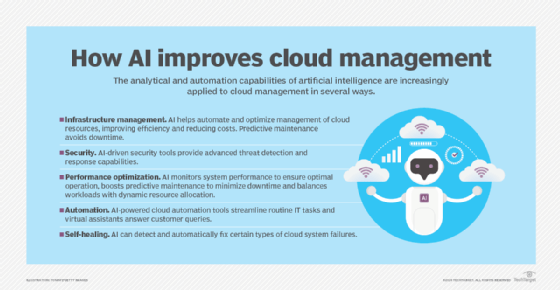
Understanding the role of AI in cloud computing
AI and Automation in Cybersecurity MSPs
Cybersecurity is a prime MSP offering where AI shines. With rising threats—even AI-assisted ones—security MSPs use AI for rapid defense.
Key Uses:
- Threat Identification and Handling: AI scans vast data for malware signs, slashing detection times dramatically compared to manual methods.
- Easing Alert Overload: AI links and ranks alerts, letting analysts focus on true risks instead of noise.
- Sophisticated Analysis: Tools like UEBA model user norms to detect anomalies, while AI boosts phishing filters beyond basic rules.
- Ops Automation: RPA manages routine security chores like intel gathering or device isolation, with hyperautomation ensuring swift, uniform responses.
AI amplifies defenses but requires human oversight for nuanced decisions. MSPs with AI report quicker threat responses.

Real-Time Threat Detection Using The Power Of AI – Cyble
AI and Automation in IT Support MSPs
In IT support, AI’s hype vs. reality is clearest to users. While self-repairing systems sound ideal, practical applications are targeted, with humans still key.
Key Uses:
- Smart Bots and Helpers: AI chatbots manage basic queries like resets, reducing human load but best in hybrid setups where experts review complex cases.
- Ticket Sorting and Assignment: AI classifies requests via text analysis, routing them efficiently or auto-resolving simple ones.
- Knowledge Handling: AI searches past data to suggest fixes, speeding resolutions and revealing trends.
- RPA for Admin Work: Automates steps like onboarding, ensuring speed and consistency without errors.
- Gen AI for Docs and Code: Assists internally with drafting or generating code, boosting efficiency.
Surveys indicate AI adoption cuts costs and speeds services, but strategic use is crucial.
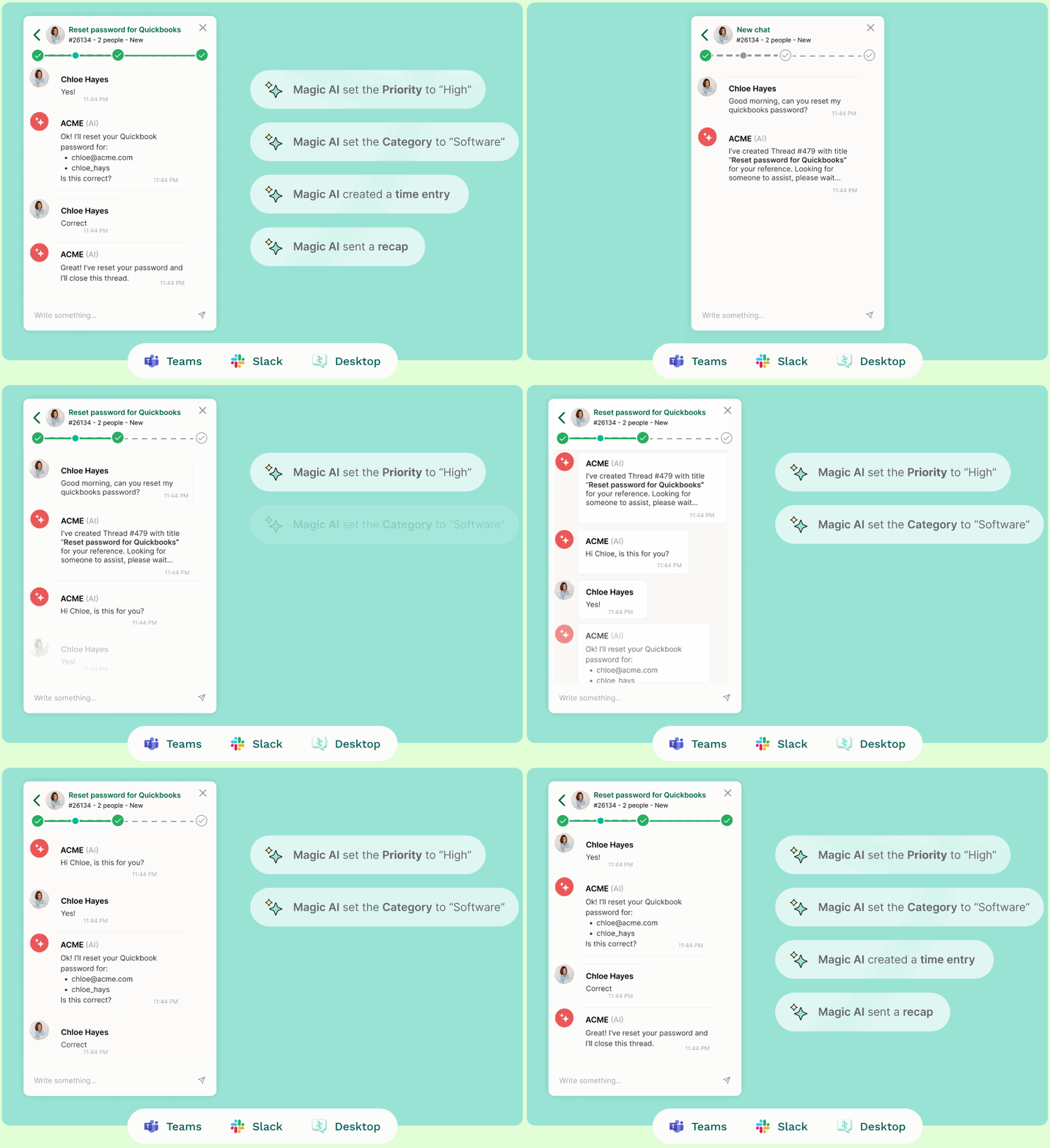
Thread – AI Service Desk for MSPs
Final Thoughts: Embracing AI Strategically
AI and automation aren’t overhyped miracles or threats—they’re tools that, when applied wisely, enhance MSP operations across cloud, security, and support. By focusing on practical integrations like those in ServiceNow, MSPs can improve efficiency, reduce costs, and deliver better value. The key is starting small, learning continuously, and keeping humans central. As the field evolves, those who balance hype with reality will lead the way.